0%

Table of Contents

broadcloth fabric is a tightly woven, plain weave cotton fabric with a smooth, flat surface. Globally, it represents a cornerstone material in the textile industry, finding application in everything from apparel and linings to industrial uses. Its versatility and relative affordability contribute to its widespread demand, particularly in regions with established textile manufacturing like China, India, and Bangladesh. Understanding broadcloth fabric is crucial for professionals in fashion, design, manufacturing, and even disaster relief, where its practical properties are highly valued.

The global trade in broadcloth fabric is substantial, driven by its role in the fast fashion industry and the demand for affordable textiles. According to recent reports, the global textile market is valued at over $1.5 trillion, with cotton fabrics like broadcloth representing a significant portion. A challenge within this sector is ensuring sustainable and ethical production practices, as conventional cotton farming can have a considerable environmental impact. This has spurred demand for organic and recycled broadcloth options.

Ultimately, mastering the properties and applications of broadcloth fabric enables informed decision-making throughout the supply chain, leading to better product development, efficient manufacturing processes, and more sustainable textile solutions.
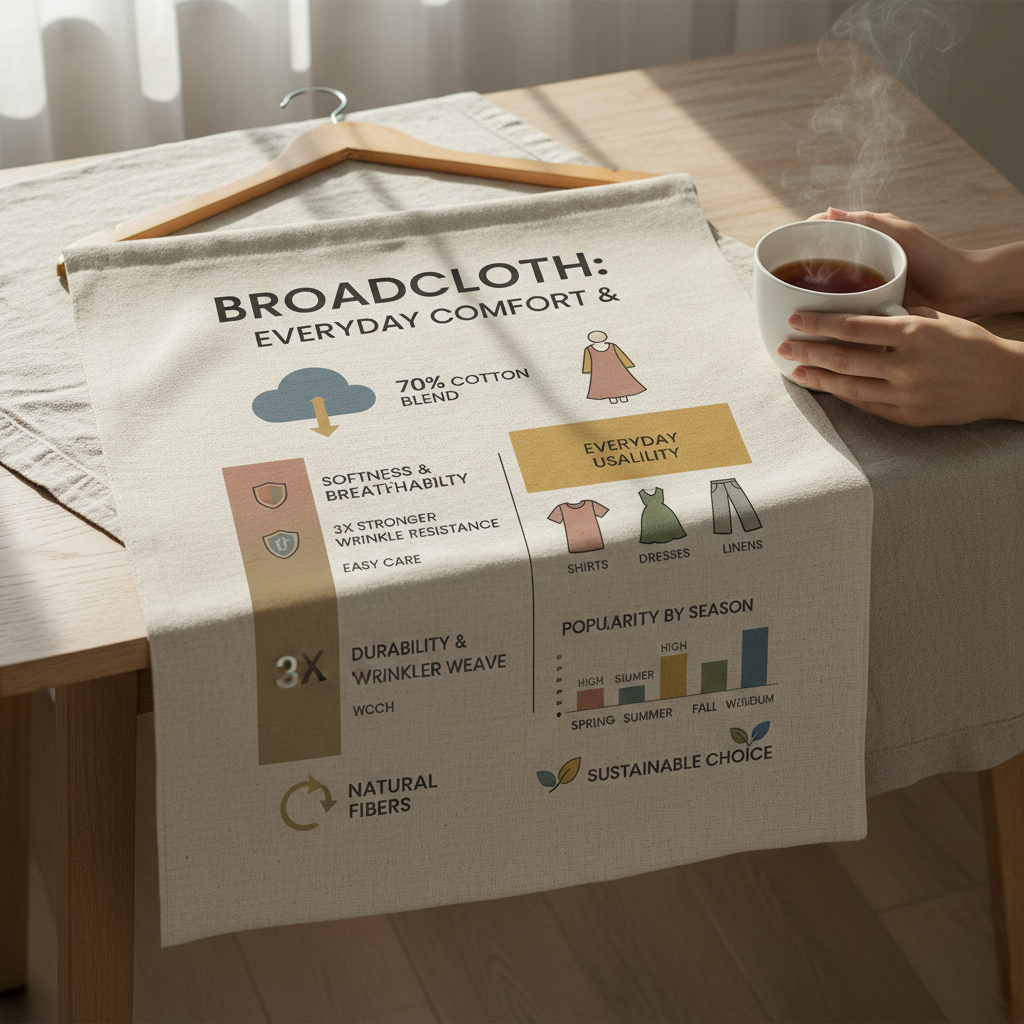
Exploring the Versatility and Significance of Broadcloth Fabric

Defining Broadcloth Fabric and Its Significance

Exploring the Versatility and Significance of Broadcloth Fabric

Broadcloth fabric, at its most basic, is a plain weave cotton fabric characterized by its tightly packed yarns, creating a smooth, durable surface. It is distinguished from other weaves by its lack of visible ribbing or patterns, giving it a refined appearance. This fabric plays a pivotal role in various industries due to its versatility and affordability.

Its significance extends beyond simple textile production. Broadcloth fabric is a foundational element in clothing manufacturing, home textiles, and even certain industrial applications, serving as a reliable and adaptable material across a wide spectrum of needs.

Historical Context and Global Relevance

The origins of broadcloth can be traced back to the medieval period in Europe, where it was initially used for military uniforms due to its durability and ability to hold dye. Over time, its production spread globally, becoming a staple in textile mills across continents. Today, countries like China, India, and Pakistan are major producers and exporters of broadcloth fabric.

The increasing demand for affordable clothing and home textiles has fueled the global relevance of broadcloth. Its adaptability to various dyeing and finishing processes makes it an ideal choice for mass production. However, this demand also presents challenges regarding sustainable sourcing and fair labor practices.

The ongoing evolution of textile technology is also shaping the industry. Innovations in weaving techniques and fiber blends are creating new variations of broadcloth with enhanced properties, further solidifying its position in the global market.

Core Characteristics of Broadcloth Fabric

One of the defining characteristics of broadcloth fabric is its tight weave. This close construction results in a smooth, flat surface that is less prone to fraying, enhancing its durability. The tightly woven structure also impacts the fabric’s draping qualities, giving it a crisp, formal appearance.

Another key characteristic is its relatively lightweight nature. Despite its tight weave, broadcloth typically isn't a heavy material, making it comfortable for clothing applications. The weight can vary depending on the yarn count and finishing treatments applied during manufacturing.

Finally, broadcloth’s ability to accept dyes readily is a significant feature. This allows for a wide range of colors and patterns, enhancing its appeal for various fashion and design applications. Its versatility in terms of finishing treatments contributes to its broad range of uses.

Key Properties Influencing Applications

The durability of broadcloth fabric is a critical property influencing its application. The tightly woven structure provides resistance to wear and tear, making it suitable for garments that require longevity. This durability also extends to its ability to withstand frequent washing and ironing.

Its smooth surface is another essential property. This smoothness allows for easy printing and embellishment, making it a favorite among designers creating patterned fabrics. The flat surface also contributes to a more refined look and feel for garments.

Broadcloth Fabric Performance Metrics


Diverse Applications of Broadcloth Fabric

Broadcloth fabric is extensively used in the apparel industry, forming the basis for shirts, blouses, dresses, and linings. Its smooth surface and ability to hold shape make it ideal for garments requiring a polished look.

Beyond clothing, broadcloth finds application in home textiles, including bed sheets, pillowcases, and curtains. Its durability and ease of care make it a practical choice for everyday household items.

The Long-Term Value Proposition

Investing in broadcloth fabric offers tangible benefits in terms of cost-effectiveness and longevity. Its durability reduces the need for frequent replacements, saving resources and money over time.

Furthermore, its versatility allows for a wide range of applications, maximizing its value across different industries. Choosing broadcloth contributes to a more sustainable approach to textile consumption, reducing waste and promoting responsible manufacturing practices.

The consistent quality and reliable performance of broadcloth fabric establish trust with consumers and manufacturers alike, solidifying its position as a preferred choice in the textile market.

Future Trends and Technological Advancements

The future of broadcloth fabric is intertwined with the growing demand for sustainable textiles. Innovations in organic cotton farming and recycled fiber technology are paving the way for eco-friendly broadcloth options.

Digital printing technologies are also transforming the way patterns are applied to broadcloth, enabling more intricate designs and reducing water consumption. Automation in weaving processes promises to increase efficiency and reduce production costs.

The development of smart textiles, incorporating sensors and conductive fibers into broadcloth, holds potential for applications in healthcare and wearable technology.

Broadcloth Fabric Sustainability Metrics

Production Method Water Usage (liters/meter) Carbon Footprint (kg CO2e/meter) Recycled Content (%)
Conventional Cotton 2000 8 0
Organic Cotton 1500 6 0
Recycled Cotton 500 3 90
Lyocell Blend 1000 5 30
Hemp Blend 800 4 50
Polyester Blend 300 7 60

FAQS

What is the typical lifespan of garments made from broadcloth fabric?

The lifespan of garments made from broadcloth fabric depends on several factors, including the quality of the fabric, the care taken during washing and ironing, and the frequency of wear. However, with proper care, broadcloth garments can typically last for 3-5 years, and often longer if they are well-maintained and used for less demanding activities. Regular cleaning and avoiding harsh detergents will extend the lifespan.

Is broadcloth fabric suitable for warm weather clothing?

Yes, broadcloth fabric can be suitable for warm weather clothing, particularly when it's a lightweight variety. Its tight weave, while durable, doesn't necessarily make it insulating. It allows for good airflow when not combined with heavier linings. However, it might wrinkle more easily than some other warm-weather fabrics, like linen.

How does broadcloth fabric compare to percale in terms of softness?

Both broadcloth fabric and percale are plain-weave cotton fabrics, but percale generally has a slightly softer feel. This is because percale typically has a higher thread count. Broadcloth is known for its smoothness, but percale tends to be more breathable and softer to the touch, making it a popular choice for bed sheets.

What are the best washing instructions for broadcloth fabric?

To maintain the quality of broadcloth fabric, it’s best to machine wash it in cold or lukewarm water with a mild detergent. Avoid using bleach, as it can weaken the fibers. Tumble dry on low heat or hang to dry. Ironing on a medium setting while slightly damp can help remove wrinkles effectively.

Is broadcloth fabric prone to shrinking after washing?

Like most natural fabrics, broadcloth fabric can experience some degree of shrinkage after washing, especially the first time. Pre-washing the fabric before cutting and sewing can help minimize this issue. Using cold water and a gentle drying cycle also reduces the risk of significant shrinkage.

Where can I purchase high-quality broadcloth fabric?

High-quality broadcloth fabric can be purchased from reputable textile suppliers and fabric stores. BossWin Textile offers a wide range of broadcloth options with varying weights, colors, and finishes. Online retailers specializing in fabrics are also a convenient source, offering a diverse selection and competitive prices.

Conclusion

In conclusion, broadcloth fabric stands as a cornerstone material in the textile industry, boasting a unique blend of durability, versatility, and affordability. From its historical roots to its current applications in apparel, home textiles, and beyond, its significance remains undeniable. Understanding its core characteristics and embracing sustainable production practices are vital for maximizing its long-term value.

Looking ahead, the continued innovation in fiber technology and manufacturing processes will undoubtedly shape the future of broadcloth. By prioritizing sustainability and embracing digital advancements, we can unlock its full potential and ensure its continued relevance in a rapidly evolving world. Visit our website at www.bosswintextile.com to explore our extensive range of broadcloth fabrics and discover how we can meet your textile needs.

Brian Wilson

Brian Wilson

Brian Wilson is a Quality Control Supervisor at Hebei Bosswin Textile Technology Co., Ltd. He leads a team dedicated to ensuring all yarn and fabrics meet rigorous quality standards. Brian is proficient in conducting comprehensive inspections, testing fabric strength, colorfastness, and dimensional stability. He’s deeply involved in resolving any quality
Previous Exploring the Versatility of Broadcloth Polyester Blend Fabric in Modern Industries
Next Exploring the Timeless Art and Sustainable Practices of Block Print Fabric