

Cotton Fabric for Sale: Wholesale, Organic, Fast Shipping
Tc65/35 220tc Trueran White Cotton Blended Fabric, 36 Inches — Insider Notes and Real-World Data
If you’ve been hunting for Cotton Fabric For Sale that behaves consistently in production and survives commercial laundering, this TC65/35 poplin is worth a serious look. To be honest, I’ve seen a lot of “shirt fabric” sold on specs alone; the difference here is steady QC and a practical width for legacy equipment (36 inches). It’s made in Shijiazhuang, Hebei—a traditional textile hub that still knows its way around plain-weave poplin.
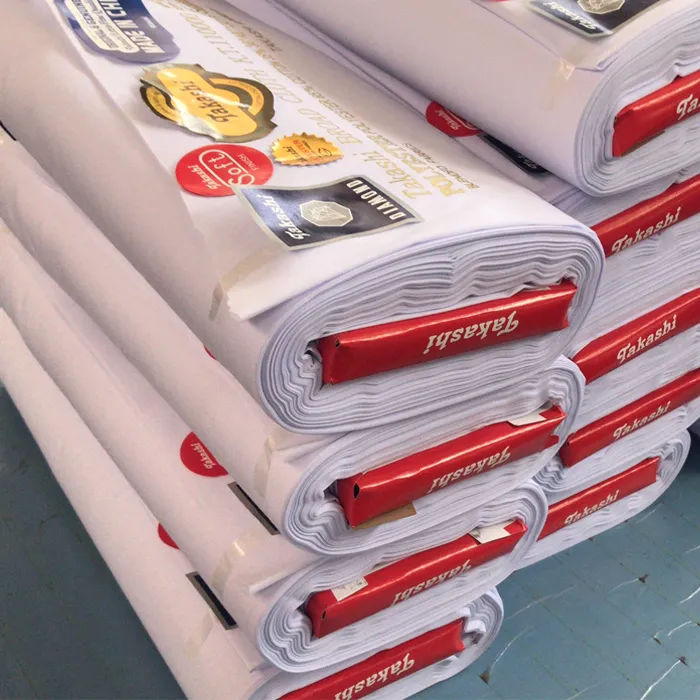
What’s Trending in Poplin Right Now
Uniform makers and hospitality brands are leaning back into poly-cotton poplin because it balances hand feel with durability. Actually, the shift to consistent 220 TC constructions is a quiet trend—buyers want fewer returns and less variance lot-to-lot. And yes, white “Trueran” finishes (optical-brightened) still dominate for aprons, pocketing, and commercial shirts that require crisp looks.
Key Product Specifications
| Product | Tc65/35 220tc Trueran White Cotton Blended Fabric (Poplin), 36 inches |
| Composition | 65% Polyester / 35% Cotton (TC 65/35) |
| Weave / Construction | Poplin (plain weave), ≈220 thread count (real-world EPI/PPI may vary by lot) |
| Width | 36 in (≈91 cm) |
| Weight | Customizable 70–175 gsm; common stock ≈110 ±5 gsm |
| Finish | Bleached/optically brightened white (Trueran look) |
| Shrinkage (AATCC 135) | ≤3% warp/≤3% weft after 3 home-launder cycles (typical) |
| Typical Tensile (ASTM D5034) | Warp ≈650 N; Weft ≈450 N (representative lab data) |
| Origin | Rm2305A, Tower2#, Jiahe Plaza, No.567 Zhongshan East Rd., Shijiazhuang, Hebei, China |
Process Flow, Testing, and Service Life
Materials: ring-spun carded or combed yarns (poly/cotton blend). Methods: plain-weave poplin, desize–scour–bleach, optical brightening, sanforization, and final calendaring. Testing: AATCC 135 for dimensional change, AATCC 61/ISO 105-C06 for wash colorfastness, ASTM D5034 tensile, ISO 12945-2 pilling. In normal hospitality rotation, garments made from this fabric last ≈100–150 commercial wash cycles; for retail shirts, 2–3 years is common, depending on detergents and heat.
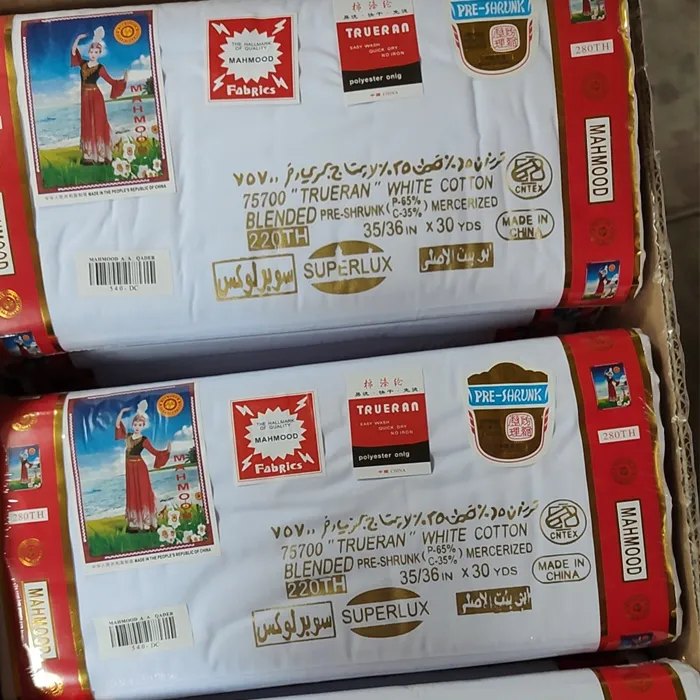
Where It’s Used (and Why It Works)
- Shirts and school uniforms: crisp hand, easy care.
- Hospitality aprons and pocketing: abrasion resistance without a heavy price tag.
- Healthcare trims and light scrubs: stable after repeated wash; good whiteness.
- Embroidery/printing bases: smooth surface, predictable shrinkage.
Many customers say the press time drops a touch thanks to the poplin’s flatter surface. It seems that the 220 TC build reduces seam puckering, too—surprisingly noticeable on pocketing.
Customization and Compliance
Dye-to-match, width tweaks, and GSM dialing are available. Typical MOQ sits around 3,000 m per color. OEKO-TEX Standard 100 availability is common request; ISO 9001-managed QC is also standard practice at reputable mills. If you need special hand feels (softener, easy care), ask for finish add-ons before lab dips.
Vendor Comparison (real-world buyer notes)
| Parameter | Bosswin Textile | Mill A (generic) | Marketplace Seller |
|---|---|---|---|
| MOQ | ≈3,000 m | 3,000–5,000 m | Small lots, mixed origin |
| Lead Time | 20–35 days (spec/finish dependent) | 30–45 days | Immediate but variable |
| Certs/Testing | AATCC/ISO methods; OEKO-TEX on request | Varies; request COAs | Limited disclosure |
| Customization | Color, GSM, width, finish | Color, GSM | Mostly off-the-shelf |
| Typical Price | USD 0.90–1.35/m (indicative) | USD 0.95–1.40/m | USD 0.85–1.60/m |
Case Notes from the Field
• A café chain switched apron fabric to this poplin and reported 20–25% fewer seam repairs across two quarters—small change, big savings.
• A school uniform maker praised the stable shrinkage; their pattern grading stayed consistent after bulk wash tests.
• A medical supplier used it as pocketing for scrubs; they liked the crisp white that held up after chlorine-free hospital laundering.
If you’re listing Cotton Fabric For Sale in your own catalog, note that buyers respond to clear wash data, tensile values, and an upfront shrinkage statement. It builds trust.
Testing & Standards (quick refs)
Colorfastness to laundering: AATCC 61 or ISO 105-C06 target ≥4 grade. Dimensional change: AATCC 135 within ±3%. Tensile: ASTM D5034 aligned with spec. Pilling: ISO 12945-2 target 4/5 after cycles. Ask for batch COA and lab dip approvals before locking POs.
References
-
Ultimate Guide to Using a Pressing Cloth for Professional FinishesNewsApr.16,2026
-
Elevate Your Fashion Designs with Premium Poly Crepe Fabric GuideNewsApr.09,2026
-
Exploring the Benefits of Premium Poly Cotton Fabric for Diverse ApplicationsNewsApr.07,2026
-
Discover the Luxury and Benefits of Premium Cotton FabricsNewsApr.04,2026
-
Exploring the Versatility and Benefits of Power Mesh Fabric ApplicationsNewsMar.31,2026
-
Comprehensive Guide to Poplin Material Properties and Diverse ApplicationsNewsMar.28,2026
-
A Comprehensive Guide to Poplin Fabric Characteristics and ApplicationsNewsMar.26,2026