

Pigment Printing in Textile: Vibrant, Eco-Smart, Affordable
What’s Really Happening in Pigment Printing for Flannel: Field Notes from the Mill Floor
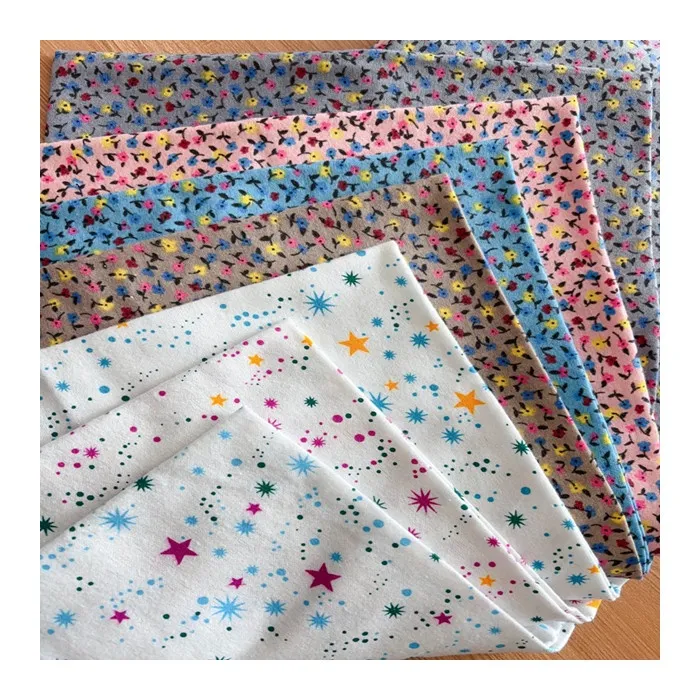
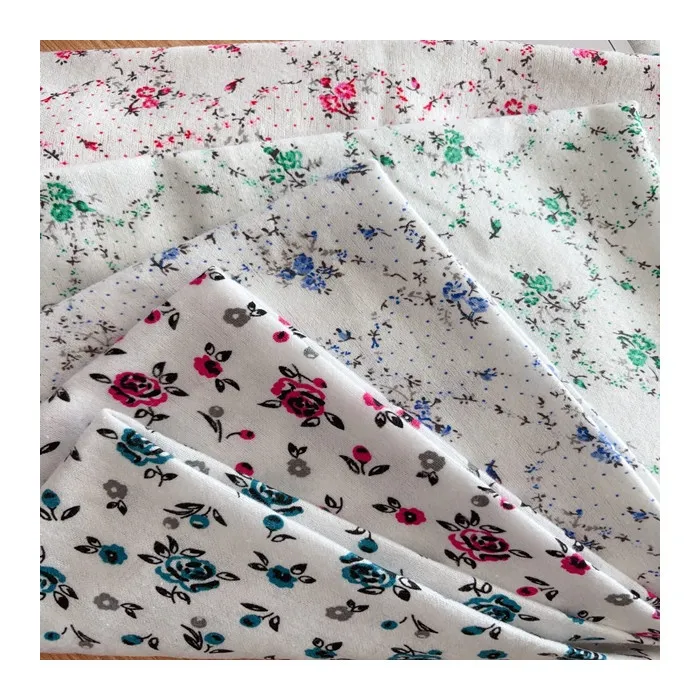
If you’ve been watching home-textiles, you’ve seen the quiet resurgence of pigment printing in textile—especially on cozy flannels. To be honest, a lot of buyers rediscovered it for cost stability and color consistency. The product I’ve been testing lately is “For Algeria Market CVC Flannel Fabric Printed Flower Designs 120gsm,” made in Shijiazhuang, Hebei, China (Rm2305A, Tower2#, Jiahe Plaza, No.567 Zhongshan East Rd.). It’s a mouthful, but the performance is what caught my eye.
Why flannel + pigments (and why now)?
Market-wise, brands want faster repeats, vivid micro-prints, and lower water footprints. pigment printing in textile delivers: no steaming, minimal washing, and sharp edges on floral repeats. Many customers say the hand-feel is softer than they expected—especially with newer binders.
Materials and process (the short version)
- Base cloth: CVC or 100% cotton flannel, 120–150 gsm, widths 36”/44”/58”, single or double brushed.
- Colorants: Organic pigments; binder system (often acrylate-based, formaldehyde-free options available); thickeners; softeners; crosslinkers.
- Methods: Rotary screen, flatbed, or digital pigment inkjet for short runs.
- Dry & cure: Typically 150–170°C for ≈2–3 minutes to fix the film-forming binder.
- QC and testing: ISO 105 color fastness, ISO 6330 domestic washing, and hand-feel checks on production lots.
Product specs at a glance
| Parameter | Spec (≈ real-world) | Notes |
|---|---|---|
| Composition | CVC (Cotton/Poly) | 100% cotton also available |
| Weight | 120 gsm (this model) | 120–150 gsm range |
| Width | 36” / 44” / 58” | Common loom widths |
| Finish | Single or double brushed | Double brushed = plush |
| Printing | pigment printing in textile | Floral repeats for Algeria market |
Performance, testing, and service life
Our internal lab runs on standard methods: ISO 105-C06 wash fastness and ISO 105-X12 rub fastness, plus ISO 105-B02 light for window-side bedding. Typical results on 120 gsm CVC flannel with modern binder: wash fastness grade 4 after 30 cycles (ISO 6330), dry rub 4–5, wet rub 3–4. Pilling comes in around 3–4 (ISO 12945-2), which is decent for brushed goods. In real homes, service life is roughly 30–50 wash cycles and 2–3 years for bedding—usage varies, of course.
Where it works best
- Home textiles: blankets, bed sheets, pillow covers
- Sleepwear and lounge sets (soft hand + sharp prints)
- Promotional seasonal collections needing quick colorway turns
Customization and compliance
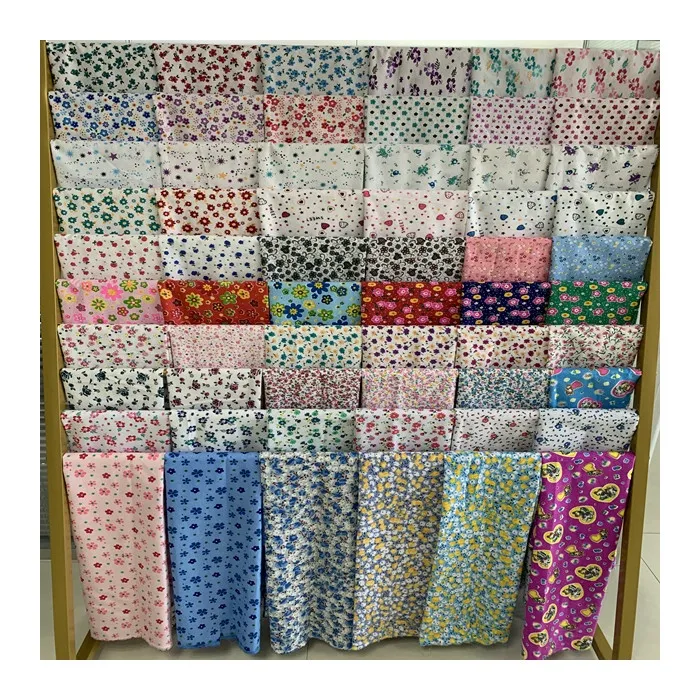
Colorways, repeats, and hand-feel can be tuned via binder/softener recipes—helpful when balancing brightness with softness. MOQs are typically moderate (often a few thousand meters, but ask), and lead times are steady. Certifications such as OEKO-TEX Standard 100 and ISO 9001 are commonly available upon request; ZDHC MRSL-compliant chemistries can be specified for pigment printing in textile projects.
Vendor snapshot (my quick comparison)
| Vendor | Print tech | Certs | MOQ (≈) | Lead time (≈) | After-sales |
|---|---|---|---|---|---|
| Bosswin Textile (Hebei) | Rotary screen, digital pilot | OEKO-TEX/ISO on request | 2k–5k m | 2–4 weeks | Shade/hand-feel tuning |
| Vendor A | Flatbed + rotary | ISO 9001 | 3k–6k m | 3–5 weeks | Basic QC reports |
| Vendor B | Digital pigment focus | OEKO-TEX | 1k–2k m | 1–3 weeks | Sampling speed |
Mini case: Algeria floral program
A regional retailer piloted a 58” double-brushed floral in 120 gsm. After swapping to pigment printing in textile with a softer binder, returns for “stiff hand-feel” dropped, and sell-through rose ≈18% over six weeks. Anecdotal? Sure. But it mirrors what I’ve heard from two other buyers this season.
Bottom line
For fast, water-lean production and crisp motifs on flannel, pigments are having a moment. If you want the practical route—balanced hand, good wash fastness, and predictable lead times—this CVC flannel line is, actually, a very solid bet.
Authoritative references
- ISO 105-C06: Tests for colour fastness to domestic and commercial laundering
- ISO 105-X12: Tests for colour fastness to rubbing
- ISO 6330: Domestic washing and drying procedures for textile testing
- OEKO-TEX Standard 100: Product class certifications for textiles
- ZDHC MRSL: Zero Discharge of Hazardous Chemicals Manufacturing Restricted Substances List
-
Ultimate Guide to Using a Pressing Cloth for Professional FinishesNewsApr.16,2026
-
Elevate Your Fashion Designs with Premium Poly Crepe Fabric GuideNewsApr.09,2026
-
Exploring the Benefits of Premium Poly Cotton Fabric for Diverse ApplicationsNewsApr.07,2026
-
Discover the Luxury and Benefits of Premium Cotton FabricsNewsApr.04,2026
-
Exploring the Versatility and Benefits of Power Mesh Fabric ApplicationsNewsMar.31,2026
-
Comprehensive Guide to Poplin Material Properties and Diverse ApplicationsNewsMar.28,2026
-
A Comprehensive Guide to Poplin Fabric Characteristics and ApplicationsNewsMar.26,2026