

Pigment Printing in Textile: Vibrant, Durable, Eco-Smart
What’s Really Driving Pigment Printing on Flannel Right Now
If you’ve ever sourced flannel for mass retail, pigment printing in textile is the quiet hero behind cost control, speed, and frankly, fewer headaches at QC. In the last year, I’ve watched regional buyers in North Africa and the Middle East double down on CVC flannel with rotary pigment prints—mostly florals, sometimes geometrics—because it hits that sweet spot: sharp design, stable color, and wallet-friendly lead times.
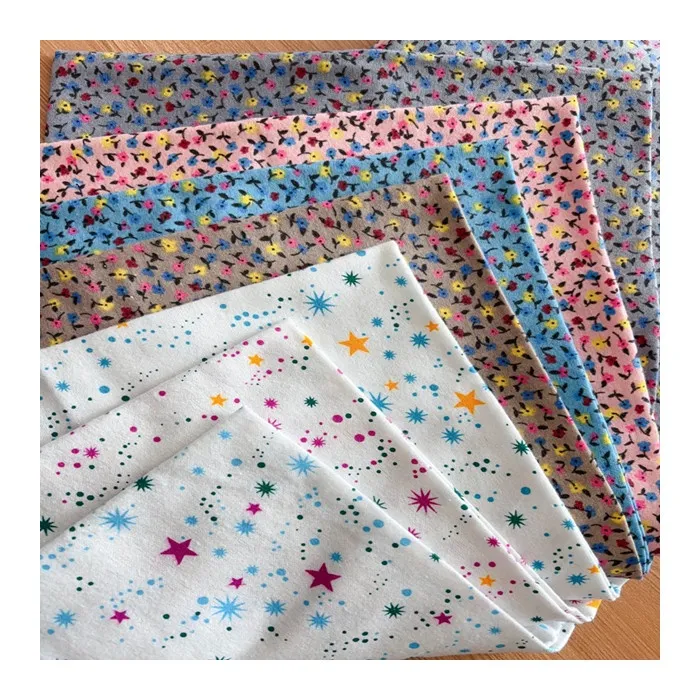
Product snapshot: CVC flannel for Algeria, printed flowers
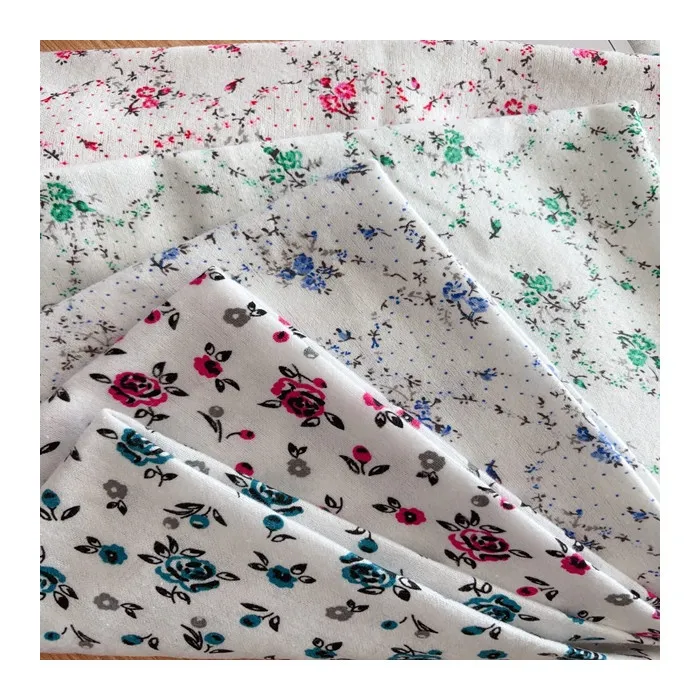
Meet the category workhorse: For Algeria Market CVC Flannel Fabric Printed Flower Designs 120gsm. Origin: Rm2305A, Tower2#, Jiahe Plaza, No.567 Zhongshan East Rd., Shijiazhuang, Hebei, China. It’s a bestseller for a reason—CVC or 100% cotton options, single- or double-sided brushed, and widths that fit most converters without drama. Honestly, buyers like the predictability.
| Spec | Details (≈ real-world) |
|---|---|
| Composition | CVC (e.g., 60% Cotton / 40% Polyester) or 100% Cotton |
| Weight | 120–150 gsm (this model ≈ 120 gsm) |
| Width | 36” / 44” / 58” typical |
| Finish | Single or double brushed |
| Print Method | Rotary/flat-screen pigment printing in textile; digital pilot runs possible |
| Use | Clothing, blankets, bed sheets; value retail and promotional lines |
Why pigment printing (and why now)
- Water-light process: compared with reactive on cotton, you’ll see significantly reduced water and energy use.
- Faster changeovers: screens swap quickly; designs lock in with binder chemistry—less soaks, fewer tantrums.
- Hand feel: on flannel, the brushed nap masks the slightly “drier” hand of pigments. Many customers say it feels surprisingly soft after first wash.
Process flow (shop-floor reality)
- Grey fabric prep: singe (if needed), desize, mild scour; target pH ≈ 6.5–7.5.
- Brushing: single or double, depending on SKU.
- Printing: rotary/flat with pigment colorant + acrylic binder + crosslinker; viscosity ≈ 15000–20000 cPs.
- Drying & curing: 150–170°C for 1–2 min (machine- and binder-dependent).
- Stenter setting: width control, skew correction.
- QC & testing: fastness, pilling, dimensional stability per standards below.
Testing standards and typical data (real-world may vary):
- ISO 105-C06 wash fastness: grade 4 (shade-dependent)
- ISO 105-X12 rubbing: dry 4, wet 3–4
- ISO 12945-2 pilling: 4 after 2000 cycles
- Dimensional change (AATCC 135): ≈ -3% warp / -2% weft after 3 washes
- Service life: ≈ 50–80 home launderings before noticeable fade on darks
Applications and industries
Bedding programs (value sets), seasonal blankets, lounge sets, and promotional apparel. Retailers like the predictable palette control with pigment printing in textile, and hospitality buyers appreciate the cost-per-use math.
Vendor landscape (quick take)
| Vendor | Certs | MOQ | Lead Time | Notes |
|---|---|---|---|---|
| Bosswin Textile (this item) | ISO 9001, OEKO-TEX Std 100 (claimed) | ≈ 3000–5000 m/design | 20–35 days | Strong CVC base; Algeria-focused patterns |
| Vendor B (regional mill) | ISO 9001 | ≈ 6000 m | 30–45 days | Competitive on basics; fewer design screens |
| Vendor C (converter) | OEKO-TEX | ≈ 1500 m (limited) | 14–25 days | Small runs; higher price per meter |
Customization, compliance, and feedback
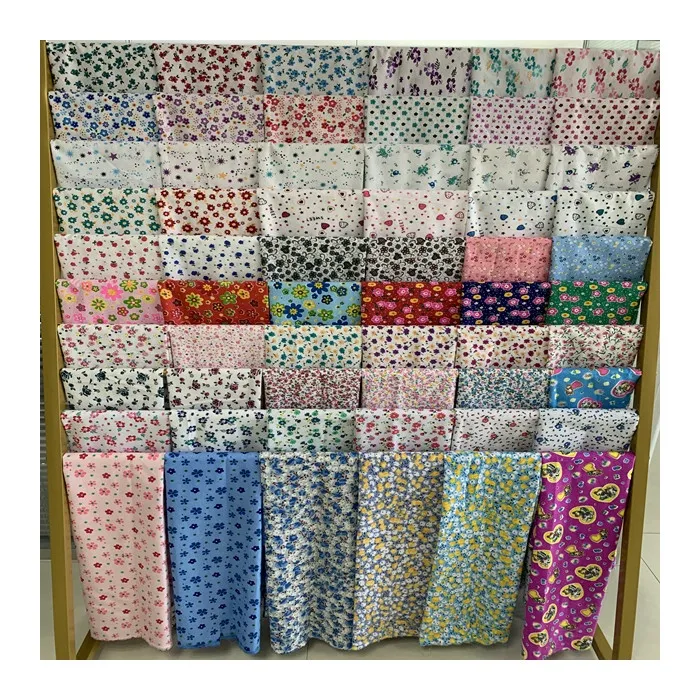
- Designs: rotary screens up to 12 colors; repeats ≈ 64–91 cm.
- Chemistry: ZDHC MRSL-aligned pigment/binder systems on request; low-formaldehyde crosslinkers.
- Certifications: ISO 9001, OEKO-TEX Standard 100; REACH-conscious formulations for EU orders.
- Customer notes: “Colors stayed put after 10 washes; no lint explosions,” one Algerian retailer told me—informal, but consistent with lab data.
Mini case study
A North African bedding chain shifted a winter promo line to pigment printing in textile CVC flannel (120 gsm). Result: -12% unit cost, -18% water use (estimated by mill utility logs), 4.0 wash fastness average, and faster replenishment. The kicker? Fewer shade claims at store level—always nice.
Final thought
Reactive still wins on deep, saturated shades for premium cotton. But for volume flannel? Pigments win the season on speed, cost, and consistency. To be honest, that’s what buyers are voting for with their POs.
Authoritative citations
- ISO 105-C06: Textiles — Tests for colour fastness to washing. https://www.iso.org/standard/66521.html
- ISO 105-X12: Textiles — Colour fastness to rubbing. https://www.iso.org/standard/66527.html
- ISO 12945-2: Pilling resistance—Martindale method. https://www.iso.org/standard/51304.html
- OEKO-TEX Standard 100 — Product class requirements. https://www.oeko-tex.com
- AATCC 135 — Dimensional changes of fabrics home laundering. https://www.aatcc.org
- ZDHC MRSL v3.1 — Chemical restrictions. https://www.roadmaptozero.com
-
Ultimate Guide to Using a Pressing Cloth for Professional FinishesNewsApr.16,2026
-
Elevate Your Fashion Designs with Premium Poly Crepe Fabric GuideNewsApr.09,2026
-
Exploring the Benefits of Premium Poly Cotton Fabric for Diverse ApplicationsNewsApr.07,2026
-
Discover the Luxury and Benefits of Premium Cotton FabricsNewsApr.04,2026
-
Exploring the Versatility and Benefits of Power Mesh Fabric ApplicationsNewsMar.31,2026
-
Comprehensive Guide to Poplin Material Properties and Diverse ApplicationsNewsMar.28,2026
-
A Comprehensive Guide to Poplin Fabric Characteristics and ApplicationsNewsMar.26,2026