

Premium Solid Poplin Fabric - White Cotton & Poly Blends
Introduction to Advanced Solid Poplin Textiles
In the diverse landscape of B2B textile procurement, the demand for high-performance, durable, and aesthetically versatile fabrics is paramount. Among these, solid poplin stands out as a foundational material, recognized for its exceptional blend of strength, smooth texture, and consistent coloration. This fabric, characterized by its plain weave and fine rib effect, is engineered to meet the rigorous specifications of various industrial and commercial applications. From corporate uniforms to medical apparel, the inherent properties of solid poplin, particularly in advanced blends like Polyester-Cotton (TC), offer an optimized solution for longevity, comfort, and ease of maintenance. Our focus here is on understanding the technical intricacies, market relevance, and strategic advantages of integrating premium solid poplin into your supply chain.
The continuous evolution of textile technology has led to innovations in fiber blending, dyeing techniques, and finishing processes, significantly enhancing the performance profile of traditional poplin. Modern manufacturing emphasizes not only the physical characteristics of the fabric but also its sustainability credentials and compliance with international standards. This comprehensive overview delves into the core aspects of advanced poplin textiles, providing insights critical for procurement specialists, product developers, and technical engineers operating within the textile sector.
Current Industry Trends in Poplin Fabric Technology
The global textile market for poplin fabrics is experiencing dynamic shifts, driven by evolving consumer demands, sustainability initiatives, and technological advancements. Key trends include the increasing adoption of sustainable practices, enhanced functional finishes, and greater customization options.
- Sustainability & Organic Materials: There is a growing preference for organic cotton poplin fabric and recycled polyester blends. Manufacturers are investing in eco-friendly dyeing processes and reducing water/energy consumption. According to a recent report by Grand View Research, the global organic textile market size was valued at USD 7.2 billion in 2022 and is expected to grow at a CAGR of 10.4% from 2023 to 2030, driven by increasing consumer awareness regarding environmental protection.
- Performance Enhancements: Innovations in finishing treatments are leading to poplin fabrics with enhanced wrinkle resistance, moisture-wicking properties, antimicrobial features, and UV protection, particularly relevant for workwear and activewear applications. This extends the utility of fabrics like poplin polyester fabric and polyester-cotton blends.
- Diversification of Blends: While plain cotton poplin fabric remains a classic, the market sees significant growth in advanced blends. Polyester-cotton poplin, such as the Tc 80/20 variant, combines the breathability of cotton with the durability and easy-care properties of polyester, optimizing performance for demanding environments.
- Digitalization in Manufacturing: The adoption of digital textile printing and advanced manufacturing execution systems (MES) is improving efficiency, reducing waste, and enabling quicker response times for customized orders, making even small-batch production of white cotton poplin fabric more feasible.
These trends collectively push the boundaries of what is possible with poplin, making it a more versatile and sustainable choice for a wide array of B2B applications.
The Advanced Manufacturing Process of Solid Poplin
The production of high-quality solid poplin fabric, such as the Tc 80/20 110x76 44 Inches Poplin Solid Dyed Fabric with Close Selvage, involves a meticulous, multi-stage process designed to ensure consistent quality, durability, and colorfastness. This process integrates advanced textile engineering with stringent quality control.
1. Material Sourcing & Yarn Preparation
High-grade polyester staple fibers and natural cotton fibers are carefully selected. For TC 80/20 poplin, these fibers are blended at precise ratios (80% polyester, 20% cotton) and spun into uniform yarns. This stage ensures the foundational strength and consistency of the fabric, forming the basis for superior cotton poplin material characteristics.
2. Weaving Process
The blended yarns are then precisely woven on high-speed looms using a plain weave structure. For a 110x76 construction, 110 warp yarns intersect with 76 weft yarns per square inch, creating the characteristic fine rib and dense texture of poplin. The "close selvage" technique ensures a neatly finished, robust edge that prevents fraying during subsequent processing and end-use.
3. Pre-Treatment & Scouring
Before dyeing, the greige fabric undergoes a series of pre-treatment processes. This includes desizing (removing sizing agents), scouring (removing natural impurities like waxes and oils), and bleaching. These steps are critical to ensure uniform absorbency and a clean base for optimal dye uptake, especially for vibrant poplin white fabric or other solid colors.
4. Solid Dyeing
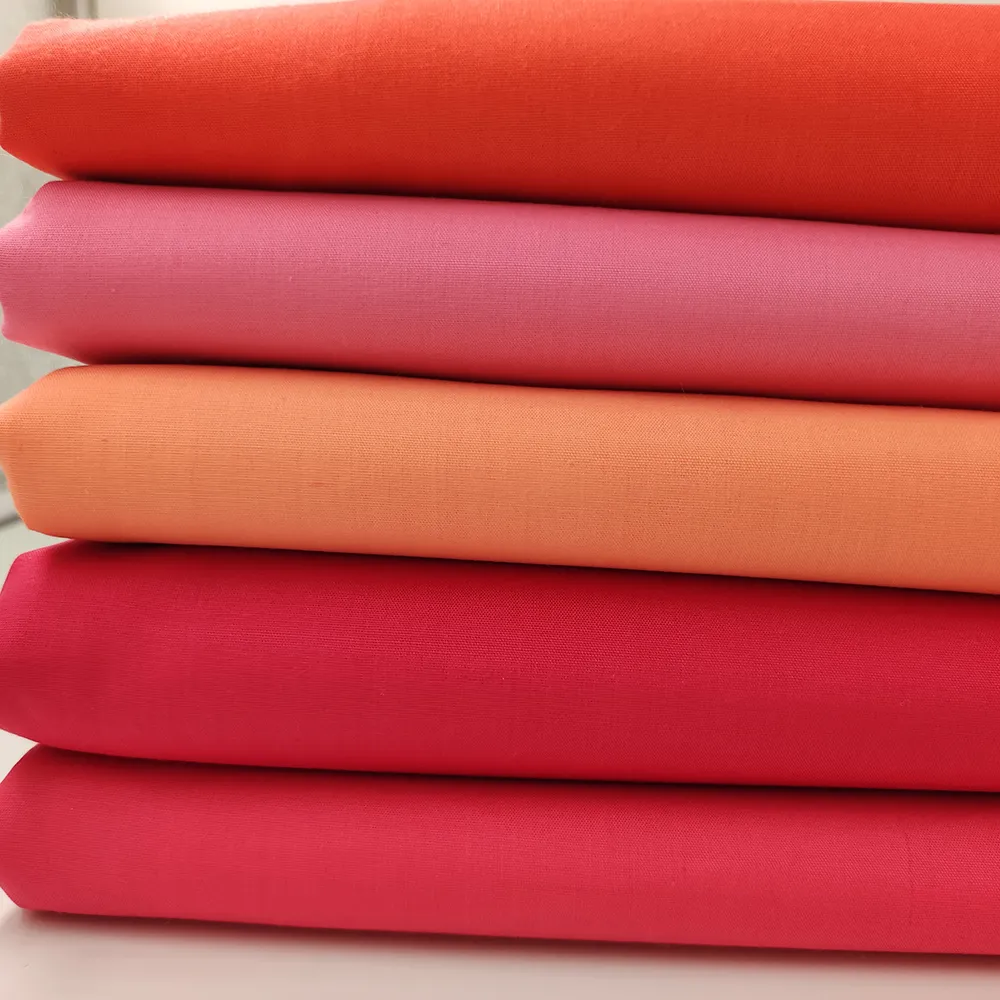
The fabric is then subjected to a continuous dyeing process. Reactive dyes for cotton and disperse dyes for polyester are carefully selected and applied under controlled temperature and pressure, ensuring deep penetration and excellent colorfastness. This process results in consistent, vibrant solid poplin hues across the entire roll, meeting stringent color matching requirements.
5. Finishing & Quality Control
Post-dyeing, the fabric undergoes various finishing treatments, which may include mercerization (for cotton components, enhancing strength and luster), heat-setting (for polyester, improving dimensional stability), calendering (for smoothness), and sanforization (for pre-shrinking). Each batch undergoes rigorous testing against international standards like ISO (e.g., ISO 105 for colorfastness, ISO 12947 for abrasion resistance) and ANSI for parameters such as tensile strength, tear strength, pilling resistance, shrinkage, and GSM (Grams per Square Meter). The final fabric is then inspected, rolled to 44 inches width, and prepared for dispatch.
Target Industries and Advantages
The robust characteristics derived from this process make TC 80/20 solid poplin ideal for a range of demanding industries:
- Workwear & Uniforms: High tensile strength and abrasion resistance ensure a longer service life, reducing replacement costs for industries such as manufacturing, logistics, and corporate services.
- Medical & Healthcare: The ability to withstand frequent industrial laundering and sterilization processes, combined with inherent durability, makes it suitable for medical scrubs, lab coats, and patient gowns.
- Hospitality: For hotel uniforms, table linens, and draperies, the colorfastness and easy-care properties of solid dyed poplin are invaluable.
- Retail Apparel (B2B): Used for mass production of shirting, blouses, and light jackets where consistency in color and quality is critical.
The rigorous manufacturing and testing regimen ensures that our polyester cotton poplin fabric delivers superior performance, providing a strategic advantage in terms of product lifespan, cost-effectiveness, and wearer satisfaction.
Technical Specifications and Performance Parameters
Understanding the precise technical specifications of solid poplin is crucial for B2B procurement, ensuring the fabric meets performance expectations for its intended application. The following table details the key parameters for our featured product: Tc 80/20 110x76 44 Inches Poplin Solid Dyed Fabric Close Selvage.
Product Specification: Tc 80/20 Poplin
| Parameter | Specification | Testing Standard |
|---|---|---|
| Composition | 80% Polyester, 20% Cotton (TC Blend) | ISO 1833-1/ASTM D629 |
| Yarn Count | 45x45 Ne (approx.) | ASTM D1059 |
| Thread Count (Density) | 110x76 (Warp x Weft per inch) | ASTM D3775 / ISO 7211-2 |
| Fabric Weight (GSM) | 105-115 g/m² (approx. 3.1-3.4 oz/yd²) | ASTM D3776 / ISO 3801 |
| Width | 44 Inches (111.76 cm) | ASTM D3774 |
| Weave Type | Poplin (Plain Weave) | Visual Inspection |
| Dyeing Type | Solid Dyed (Reactive & Disperse Dyes) | Visual Inspection |
| Selvage | Close Selvage | Visual Inspection |
| Colorfastness to Washing | Grade 4-5 (Min.) | ISO 105 C06 / AATCC 61 |
| Colorfastness to Light | Grade 4 (Min.) | ISO 105 B02 / AATCC 16 |
| Shrinkage (Max.) | ±3% (Warp & Weft) | ISO 6330 / AATCC 135 |
| Tensile Strength | >400N (Warp), >300N (Weft) | ISO 13934-1 / ASTM D5034 |
| Tear Strength | >25N (Warp), >20N (Weft) | ISO 13937-2 / ASTM D1424 |
These detailed specifications underscore the commitment to quality and performance, ensuring that our poplin fabric cotton blend meets the highest industrial benchmarks. The TC 80/20 blend is particularly balanced, providing the crisp hand and breathability of cotton with the enhanced resilience and wrinkle resistance characteristic of polyester, making it a superior choice for professional apparel.
Versatile Application Scenarios for Solid Poplin
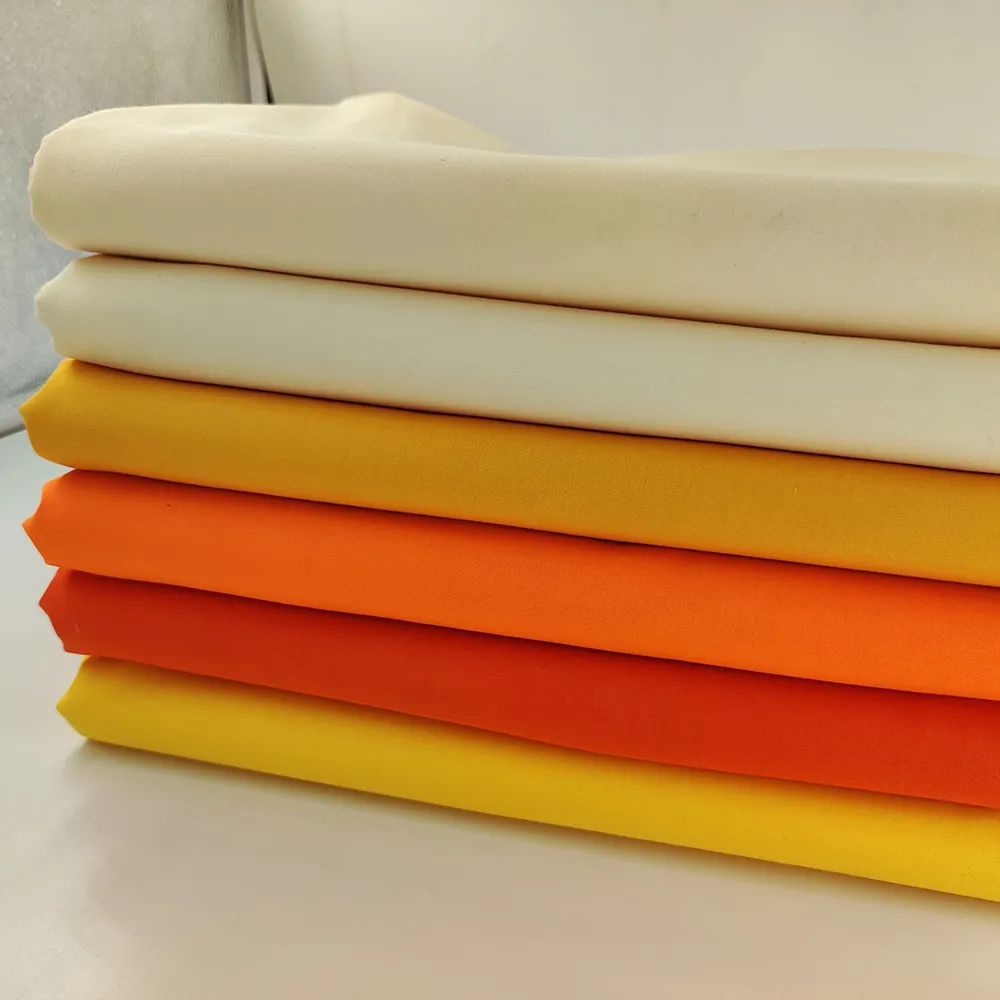
The inherent versatility and robust characteristics of solid poplin make it an indispensable fabric across a multitude of B2B application scenarios. Its balanced blend of aesthetic appeal, tactile comfort, and exceptional durability positions it as a preferred choice for industries requiring both professional presentation and functional resilience.
- Corporate Uniforms and Apparel: For sectors like finance, retail, and administrative services, the crisp drape and consistent coloration of poplin fabric cotton blends are ideal for shirts, blouses, and light jackets. The 110x76 thread count ensures a polished look, while the TC blend offers enhanced wrinkle resistance, reducing the need for frequent ironing and extending garment life. This translates to reduced maintenance costs for large organizations.
- Healthcare and Medical Textiles: In hospitals, clinics, and laboratories, fabrics must withstand rigorous washing cycles and maintain integrity. Our Tc 80/20 poplin polyester excels here, offering high tensile strength, excellent colorfastness to repeated laundering, and breathability for wearer comfort. It's perfectly suited for medical scrubs, lab coats, and patient wear, providing both hygiene and durability.
- Hospitality and Food Service: Uniforms for hotel staff, restaurant personnel, and catering teams benefit immensely from solid dyed poplin. Its resistance to fading and pilling ensures uniforms retain a professional appearance over time. The close selvage minimizes fraying during garment construction and use, ensuring a higher quality finished product for a demanding environment.
- Educational Institutions: School uniforms require fabrics that are both comfortable for daily wear and durable enough to withstand the wear and tear of active children. Cotton poplin fabric by the yard offers an economical yet high-quality solution that meets these dual requirements, offering excellent value for money to educational procurement departments.
- Industrial Workwear (Light Duty): For roles that require smart but robust attire, such as supervisors or administrative roles within manufacturing plants, poplin provides a comfortable yet professional option. Its easy-care properties are particularly advantageous in environments where garments may be exposed to light soiling.
Beyond these core applications, the adaptability of our polyester cotton poplin fabric extends to linings for outerwear, decorative home textile elements, and specialty craft applications where a stable, smoothly colored fabric is required. The ability of the fabric to maintain its structure and color under diverse conditions makes it a cost-effective and reliable choice for B2B partners.
Technical Advantages and Performance Metrics
The selection of solid poplin, particularly our Tc 80/20 blend, offers distinct technical advantages that directly translate into operational benefits and cost savings for B2B clients. These advantages are rooted in the precise engineering of its composition, weave, and finishing.
- Superior Durability and Longevity: The TC 80/20 blend leverages the inherent strength of polyester (high abrasion resistance, tear strength) and combines it with the natural resilience of cotton. This results in a fabric that withstands frequent wear, stretching, and industrial laundering cycles, significantly extending the service life of garments and textiles. Data indicates that polyester blends can extend garment life by 30-50% compared to 100% cotton in high-stress applications.
- Exceptional Colorfastness: Our solid dyeing process utilizes advanced reactive and disperse dyes, ensuring superior color retention even after repeated washing and exposure to light. This is critical for maintaining uniform appearance across garment batches and over time, reducing the need for early replacements due to fading. The colorfastness grade of 4-5 to washing (ISO 105 C06) signifies excellent performance.
- Dimensional Stability and Low Shrinkage: The controlled heat-setting of the polyester component and sanforization of the entire fabric ensures excellent dimensional stability. With a maximum shrinkage of ±3%, garments maintain their original fit and shape, which is vital for professional uniforms where consistent sizing is paramount. This also simplifies pattern making and reduces manufacturing waste.
- Enhanced Wrinkle Resistance & Easy Care: The polyester content provides inherent wrinkle recovery properties, minimizing creasing during wear and washing. This translates to lower maintenance costs, as garments made from our poplin polyester fabric require less ironing, saving time and energy in commercial laundries.
- Consistent Quality and Smooth Hand: The 110x76 thread count and plain weave construction contribute to a consistently smooth surface and a crisp, professional hand feel. The close selvage ensures fabric integrity during cutting and sewing, leading to higher efficiency in garment manufacturing and a superior finished product.
These technical attributes collectively deliver a high-value proposition, optimizing performance for B2B applications while contributing to overall operational efficiency and cost-effectiveness.
Vendor Comparison: Optimizing Your Poplin Sourcing
When sourcing solid poplin, discerning B2B buyers consider several factors beyond price alone. A comprehensive vendor comparison focuses on quality, consistency, certification, customization capabilities, and supply chain reliability. Bosswin Textile distinguishes itself through a commitment to these critical areas.
Key Vendor Differentiators for Poplin Fabrics
| Feature Category | Bosswin Textile (Example) | Generic Vendor (Typical) |
|---|---|---|
| Product Range | Extensive TC, CVC, 100% Cotton & polyester poplin, various finishes, widths. | Limited blend ratios, standard finishes, common widths. |
| Quality Certifications | ISO 9001, Oeko-Tex Standard 100 (for specific products), consistent adherence to international textile standards. | May lack comprehensive or updated certifications; variable adherence. |
| Technical Expertise & R&D | In-house R&D for new blends, functional finishes, and sustainable dyeing techniques; experienced textile engineers. | Often relies on standard formulations; limited innovation. |
| Customization Options | Flexible minimum order quantities (MOQs) for custom colors, widths, finishes, and blends. | High MOQs for customization; limited bespoke options. |
| Supply Chain Reliability | Established global logistics, transparent lead times, robust inventory management, strong supplier relationships. | Potential for delays, less transparent communication, limited stock. |
| Customer Support | Dedicated technical support, responsive inquiry handling, after-sales service, and technical consultation. | Standardized support, slower response times, less technical depth. |
Choosing a vendor with a proven track record for technical competence and customer-centric service is paramount. Our commitment to ISO-certified processes and continuous improvement ensures that every yard of cotton poplin fabric by the yard or blended poplin meets stringent quality control standards, providing peace of mind and consistent performance for our B2B partners.
Customized Solutions for Specialized Applications
Recognizing that off-the-shelf solutions may not always meet unique B2B requirements, we offer extensive customization options for our solid poplin fabrics. This flexibility allows clients to tailor fabric properties precisely to their application's demands, ensuring optimal performance and design integration.
- Blend Ratio Adjustments: While Tc 80/20 is a standard, we can customize polyester-cotton ratios (e.g., Tc 65/35, CVC 50/50) to fine-tune properties such as breathability, wrinkle resistance, and durability, catering to specific environmental or user comfort needs. This flexibility extends to poplin fabric cotton variants as well.
- Custom Color Matching: Leveraging advanced spectrophotometry and extensive dye libraries, we can match virtually any Pantone or specific client-provided color swatch, ensuring brand consistency across all textile products. This is critical for corporate branding on uniforms and specialized apparel.
- Specialized Finishes: Beyond standard finishes, we offer treatments such as:
- Water-Repellent (WR) or Water-Resistant (DWR): For outdoor wear or environments requiring moisture protection.
- Antimicrobial/Antibacterial: Essential for medical textiles and uniforms in hygiene-sensitive areas.
- Flame Retardant (FR): For protective workwear in hazardous industries.
- Easy-Care/Non-Iron: Further enhancing the low-maintenance properties of the fabric.
- Width and Thread Count Modifications: While 44 inches and 110x76 are common, we can produce solid poplin in alternative widths or with modified thread counts to achieve different drape, weight, or strength profiles, aligning with specific garment construction or end-use performance requirements.
- Sustainable Options: For clients prioritizing environmental impact, we offer solutions incorporating organic cotton poplin fabric, recycled polyester yarns, or utilizing low-impact dyeing methods, coupled with relevant certifications like Oeko-Tex or GOTS (for organic cotton).
Our technical team collaborates closely with clients from concept to production, providing expert consultation to develop tailor-made fabric solutions that meet precise performance and aesthetic criteria, ensuring complete satisfaction and differentiation in the market.
Application Case Studies: Solid Poplin in Action
The practical application of high-quality solid poplin demonstrates its tangible benefits in diverse B2B contexts. These case studies highlight how our fabrics have contributed to improved product performance and client satisfaction.
Case Study 1: Large-Scale Corporate Uniform Program
A national logistics company required durable, professional, and easy-care uniforms for its 5,000-strong administrative and supervisory staff. Their previous poplin fabric cotton uniforms suffered from rapid fading and excessive wrinkling, leading to high replacement costs and a less-than-professional appearance.
- Solution: We supplied our Tc 80/20 110x76 solid poplin in a custom brand color. The fabric underwent a specialized easy-care finish to further enhance its wrinkle resistance.
- Results: After 18 months of deployment, uniforms showed significantly less fading (measured against ISO 105 B02 standards) and maintained a crisp appearance throughout the workday. The client reported a 40% reduction in uniform replacement frequency and a 25% decrease in laundry-related labor costs due to reduced ironing. Employee feedback highlighted improved comfort and a more professional feel compared to previous fabrics.
Case Study 2: High-Performance Medical Scrubs
A leading manufacturer of medical apparel sought a fabric for new line of scrubs designed for high-stress hospital environments. The primary challenges were achieving superior durability, maintaining hygiene through frequent hot washing, and ensuring comfort for extended shifts, particularly for plain cotton poplin fabric alternatives.
- Solution: We provided a customized version of our Tc 80/20 poplin polyester fabric with an enhanced antimicrobial finish. This fabric was chosen for its high tensile strength and colorfastness to severe washing conditions (simulating hospital-grade sterilization cycles).
- Results: The medical apparel manufacturer successfully launched their new scrub line. Laboratory tests confirmed that the fabric maintained its integrity and color after 75 industrial washes (exceeding initial targets), with microbial tests showing significant reduction in bacterial growth on the treated fabric. End-user feedback cited exceptional comfort, breathability, and the scrubs' ability to maintain a professional look despite demanding conditions. This led to an exclusive, long-term supply agreement for the poplin polyester.
Trust & Reliability: Partnership with Bosswin Textile
Frequently Asked Questions (FAQ)
Q1: What is the typical lead time for a bulk order of solid poplin?
A: Our standard lead time for bulk orders of our Tc 80/20 solid poplin is typically 20-30 days from confirmation of order and receipt of down payment. This may vary based on customization requirements, order volume, and current production schedules. We provide precise lead time estimates at the time of quotation.
Q2: What are your quality control and testing standards for poplin fabrics?
A: We adhere to stringent international quality control standards, including ISO 9001 for quality management systems. Our fabrics undergo comprehensive testing for parameters such as colorfastness (ISO 105), tensile and tear strength (ISO 13934, ISO 13937), dimensional stability/shrinkage (ISO 6330), and pilling resistance (ISO 12945). All test reports are available upon request.
Q3: Can you accommodate custom color requests for white cotton poplin fabric or other shades?
A: Absolutely. We offer comprehensive custom color matching services. Clients can provide Pantone codes or physical color swatches, and our dyeing specialists will ensure a precise match for their solid poplin orders, subject to minimum order quantities.
Q4: What is your warranty policy for fabric defects?
A: We stand by the quality of our products. In the unlikely event of a manufacturing defect, we offer a warranty period of 30 days from the date of receipt, provided the fabric has not been cut, processed, or altered. Our quality assurance team will investigate any claims promptly to ensure a fair resolution.
Q5: How can I request samples or get technical support?
A: Samples can be requested directly through our website or by contacting our sales team via email or phone. For technical support or detailed product inquiries about our poplin fabric cotton, our experienced textile engineers and customer support representatives are available to provide expert assistance. You can reach us via the contact information provided on our website.
Lead Time & Fulfillment
Bosswin Textile maintains a robust supply chain and efficient production scheduling to ensure timely delivery. Standard lead times for stock items are generally 7-14 days. For custom production runs of solid poplin fabrics, lead times are typically 20-30 days, contingent on fabric type, order volume, and specific finishing requirements. We offer flexible shipping options, including sea and air freight, to meet global distribution needs, with transparent communication throughout the fulfillment process.
Warranty and After-Sales Support
Our commitment to quality extends beyond delivery. Bosswin Textile provides a comprehensive warranty against manufacturing defects, ensuring that our polyester cotton poplin fabric meets agreed-upon specifications. Our dedicated after-sales support team is readily available to address any queries, provide technical guidance, or assist with product-related challenges, reinforcing our role as a trusted partner in your textile procurement strategy.
Authoritative References and Citations
- Grand View Research. (2023). Organic Textile Market Size, Share & Trends Analysis Report. Retrieved from [https://www.grandviewresearch.com/industry-analysis/organic-textile-market] (Accessed for market trend data)
- International Organization for Standardization (ISO). (Various). ISO 105 Textiles – Tests for colour fastness, ISO 12947 Textiles – Determination of the abrasion resistance of fabrics, ISO 6330 Textiles – Domestic washing and drying procedures for textile testing. Retrieved from [https://www.iso.org/]
- American Society for Testing and Materials (ASTM International). (Various). ASTM D3776 Standard Test Methods for Mass Per Unit Area (Weight) of Fabric, ASTM D5034 Standard Test Method for Breaking Strength and Elongation of Textile Fabrics (Grab Test). Retrieved from [https://www.astm.org/]
- Textile Exchange. (Various). Reports on Sustainable Materials and Industry Best Practices. Retrieved from [https://textileexchange.org/] (General industry sustainability practices)
- Oeko-Tex Association. (Various). Oeko-Tex Standard 100 Certification. Retrieved from [https://www.oeko-tex.com/] (General textile safety and sustainability standards)
-
Ultimate Guide to Using a Pressing Cloth for Professional FinishesNewsApr.16,2026
-
Elevate Your Fashion Designs with Premium Poly Crepe Fabric GuideNewsApr.09,2026
-
Exploring the Benefits of Premium Poly Cotton Fabric for Diverse ApplicationsNewsApr.07,2026
-
Discover the Luxury and Benefits of Premium Cotton FabricsNewsApr.04,2026
-
Exploring the Versatility and Benefits of Power Mesh Fabric ApplicationsNewsMar.31,2026
-
Comprehensive Guide to Poplin Material Properties and Diverse ApplicationsNewsMar.28,2026
-
A Comprehensive Guide to Poplin Fabric Characteristics and ApplicationsNewsMar.26,2026