Let's talk about chiffon fabric. It’s something you see everywhere – flowing dresses, scarves, linings – but most folks don’t really understand what makes it tick. I've spent years on construction sites, dealing with materials that need to hold up, that need to perform, and honestly, that comparison informs how I see fabrics too. Chiffon might look delicate, but there’s a lot of engineering that goes into getting that drape and feel just right. Understanding it isn't just about fashion, it's about knowing how materials are made and what they're capable of. It's impacting everything from high fashion runways to the practical linings of workwear.
Globally, the demand for lightweight, elegant fabrics like chiffon is booming, especially in the apparel industry. The UN Comtrade database shows a consistent rise in textile imports, and chiffon, while a smaller segment, is growing alongside that trend. This isn’t just a luxury market thing either; affordable chiffon blends are becoming increasingly popular in fast fashion. The challenge? Keeping up with demand and ensuring ethical and sustainable production methods. We’re seeing a push for transparency in supply chains, and that’s putting pressure on manufacturers to demonstrate responsible practices.
Simply put, chiffon fabric is a lightweight, sheer fabric traditionally made from silk, but nowadays often crafted from polyester or nylon. It's known for its delicate texture and flowing drape. It’s a textile that allows light to pass through, creating a soft, almost ethereal look. In today's industry, it’s more than just pretty material; it’s integral to creating garments with specific aesthetic and functional qualities. The demand isn't just about looks - it’s tied to the broader need for versatile, adaptable materials in a rapidly changing world.
The Essence of Chiffon Fabric
I've been in this business long enough to see fabrics come and go. Chiffon's staying power isn't just about being pretty; it's about its versatility. You can dye it, print on it, layer it, and it always adds a certain something. It's a fabric that adapts. The construction process, though—that’s where it gets interesting. It’s all about the weave, the yarn count, and how tightly those fibers are twisted.
What’s often overlooked is the engineering involved. Achieving that signature chiffon drape requires a precise balance of fiber selection and weaving technique. It’s not just about making something look delicate, it’s about making something that feels delicate, that moves with the body, and holds its shape without being stiff. This is crucial for everything from evening gowns to the linings of high-performance sportswear.
The Global Landscape of Chiffon
The global textiles market is a huge beast. You've got China dominating production, India making strides in specialized weaves, and Europe focusing on high-end designs. Chiffon is woven into that whole network. We’re seeing a big shift towards sustainable practices, though. Consumers are demanding to know where their clothes come from, and that pressure is trickling down to the fabric level.
What I’m seeing on the ground, talking to mills and manufacturers, is a real push for recycled polyester chiffon. It’s a smart move – it reduces reliance on virgin materials and addresses the plastic waste problem. But it also presents challenges. Maintaining the same level of quality and drape with recycled fibers requires innovation in the weaving process.
Looking at trade data, the ASEAN region is becoming a major player in chiffon production, offering competitive pricing and increasingly sophisticated manufacturing capabilities. This is changing the supply chain landscape and creating new opportunities for brands looking to diversify their sourcing. The ISO 9001 certification is becoming standard, pushing quality control across the board.
Defining Chiffon Fabric
At its core, chiffon is a plain weave fabric, which means the warp and weft threads interlace in a simple over-under pattern. This is what creates that characteristic lightness and transparency. It’s distinct from more complex weaves like satin or twill, which have a different look and feel. You can really see the difference when you compare them side by side.
The connection to modern industry is huge. Chiffon isn't just limited to dresses anymore. It's used in technical textiles, stage costumes, and even as a protective layer in some industrial applications. Its breathability and lightweight nature make it valuable in situations where comfort and freedom of movement are crucial. You’ll find it in things you wouldn’t even expect.
The humanitarian aspect is also worth noting. Lightweight, breathable fabrics like chiffon can be incredibly important in disaster relief, providing clothing and shelter materials that are comfortable and easy to transport. It's often included in aid packages where temperature regulation is essential.
Key Characteristics of Chiffon Fabric
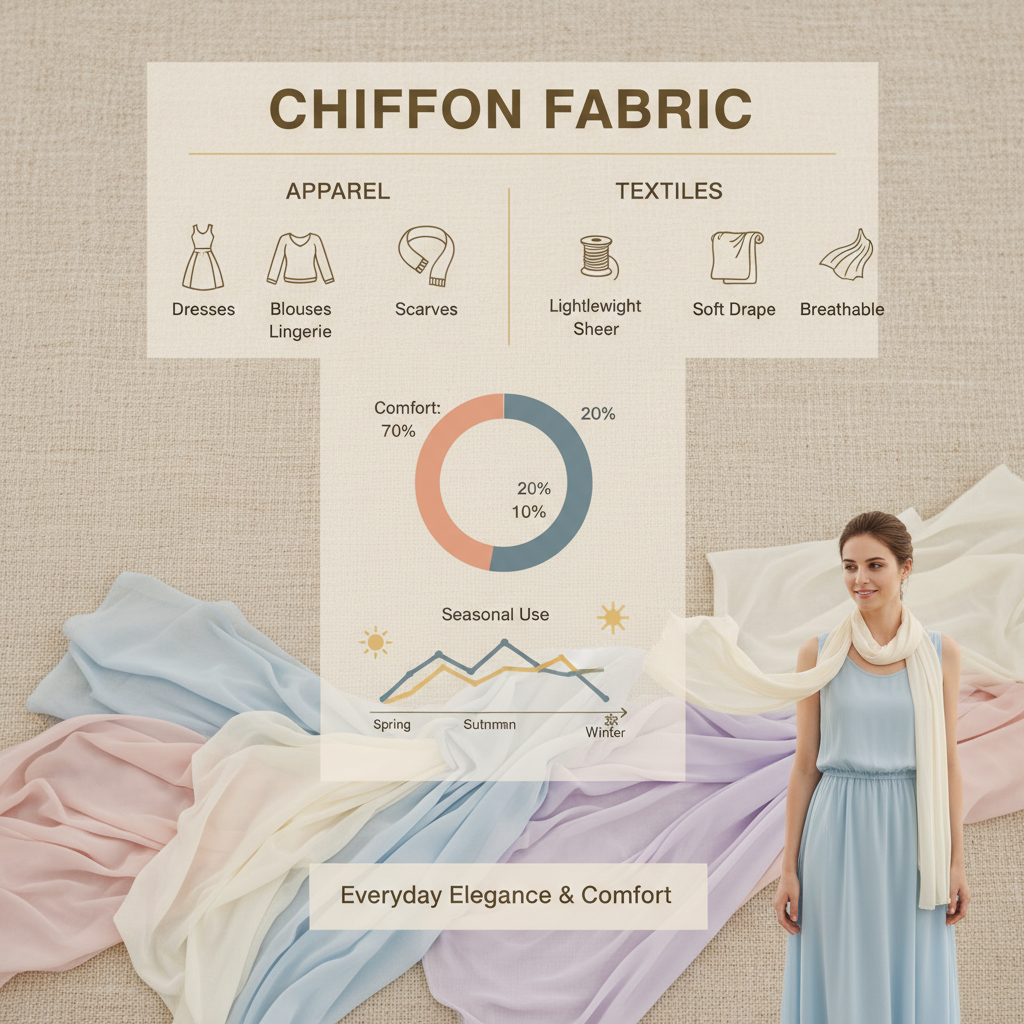
Let's break down what makes chiffon, chiffon. First, there's its sheer quality – you can see through it. This makes it ideal for layering or creating delicate designs. Then you’ve got the drape. It flows beautifully, which is why it's so popular for evening wear. But that drape isn’t accidental.
Durability is a tricky one. Chiffon isn't known for being tough. It snags easily, and it's delicate to handle. That's why you need to be careful with it during manufacturing and care. However, modern polyester chiffon blends are significantly more durable than traditional silk chiffon. Scalability of production depends heavily on the type of chiffon. Silk chiffon is limited by silk production, while polyester chiffon can be scaled up much more easily.
Chiffon Fabric Production Costs (per meter)
Real-World Applications of Chiffon
You see chiffon everywhere, of course, in the fashion world. Evening gowns, scarves, blouses – it’s a staple. But its use extends beyond aesthetics. I've seen it used as a lining material in high-end workwear, adding a layer of comfort and breathability. It's also popular in stage costumes due to its flowing movement and ability to catch the light.
In regions like India and Southeast Asia, chiffon is used extensively in traditional garments like saris and shawls. These are often intricately embroidered and represent a significant part of the local culture. Europe and North America are major markets for chiffon garments and accessories, driven by high-fashion trends and consumer demand.
Advantages and Long-Term Value
The beauty of chiffon is its cost-effectiveness. Polyester chiffon, in particular, offers a luxurious look at a fraction of the price of silk. And the improved durability of modern blends means garments last longer, reducing waste. Beyond that, there’s the sustainability angle – opting for recycled polyester reduces our reliance on fossil fuels.
The emotional value is important too. A beautifully draped chiffon gown can make someone feel confident and elegant. That’s not something you can quantify, but it’s a real benefit. And the trust built with consumers by using transparent and ethical sourcing practices is invaluable in today's market.
Future Trends and Innovations in Chiffon
We’re seeing a lot of research into bio-based chiffon alternatives. Using materials like seaweed or mushroom fibers to create a similar texture and drape could be a game-changer. Digital printing technologies are also evolving, allowing for more intricate and sustainable designs on chiffon fabrics.
Automation is playing a bigger role in chiffon production, increasing efficiency and reducing waste. And the push for circularity – designing garments that can be easily recycled or repurposed – is driving innovation in fabric blends and manufacturing processes. I'm expecting to see more fabrics with integrated smart technologies, like temperature regulation or UV protection, in the near future.
The trend towards customization and personalization will also impact chiffon. Digital printing allows for on-demand production of unique designs, catering to individual customer preferences. This aligns with the growing demand for bespoke and sustainable fashion choices.
Summary of Challenges and Solutions for Chiffon Production
| Challenge |
Material Sourcing |
Production Efficiency |
Sustainability |
| Limited Durability |
Sourcing high-quality silk or polyester yarns. |
Optimizing weaving techniques to increase yarn density. |
Exploring recycled polyester options. |
| High Production Costs |
Negotiating favorable pricing with yarn suppliers. |
Implementing automation to reduce labor costs. |
Reducing waste through efficient cutting and pattern making. |
| Environmental Impact |
Utilizing organic or recycled materials. |
Adopting water-efficient dyeing and finishing processes. |
Implementing closed-loop manufacturing systems. |
| Supply Chain Transparency |
Establishing traceability systems to track material origins. |
Conducting regular audits of suppliers. |
Collaborating with organizations promoting ethical sourcing. |
| Maintaining Quality Control |
Implementing rigorous yarn testing procedures. |
Investing in advanced weaving machinery. |
Training personnel in quality control techniques. |
| Meeting Consumer Demand |
Diversifying material sourcing options. |
Increasing production capacity. |
Adapting to changing fashion trends. |
FAQS
Silk chiffon is derived from natural silk fibers, resulting in a luxurious feel, excellent drape, and higher breathability. However, it’s significantly more expensive and delicate. Polyester chiffon, on the other hand, is synthetic, offering greater durability, affordability, and wrinkle resistance. Modern polyester chiffon can mimic the look and feel of silk quite effectively, making it a popular choice for many applications. It all comes down to balancing budget and desired qualities.
Chiffon requires gentle care. Hand washing or using a delicate cycle in a washing machine with cold water is best. Avoid harsh detergents and bleach. It's generally best to lay it flat to dry, as tumble drying can damage the delicate fibers. Ironing should be done on a low setting, and ideally with a pressing cloth to protect the fabric. Proper care will significantly extend the life of your chiffon garments.
The sustainability of chiffon depends on its composition. Silk chiffon, while natural, has its own environmental concerns related to silkworm farming. Polyester chiffon, traditionally made from petroleum, is less sustainable. However, recycled polyester chiffon is a more eco-friendly option, reducing reliance on virgin materials. Look for certifications like GRS (Global Recycled Standard) to ensure the recycled content is verified.
Chiffon’s versatility means it’s used in a wide range of applications. It’s commonly used for evening gowns, blouses, scarves, and linings. It's also popular in bridal wear due to its delicate and romantic appearance. Beyond fashion, you’ll find it in home décor – curtains, draperies – and even in certain technical textile applications where lightweight and breathability are essential.
Chiffon can be dyed, but it requires careful technique. Due to its sheer and delicate nature, it’s prone to damage during the dyeing process. It's best to use low-temperature dyes and gentle handling. Polyester chiffon is easier to dye than silk chiffon, but achieving vibrant and consistent colors can still be challenging. Professional dyeing is often recommended for optimal results.
The cost of chiffon fabric varies significantly depending on the material and quality. Silk chiffon is the most expensive, ranging from $15 to $30 per meter. Polyester chiffon is more affordable, typically costing between $6 and $12 per meter. Recycled polyester chiffon falls somewhere in between, around $8 to $15 per meter. Prices can also fluctuate based on dye colors, patterns, and supplier.
Conclusion
From its delicate drape to its surprisingly versatile applications, chiffon fabric remains a cornerstone of the textile industry. Understanding its nuances – from fiber composition to production processes – is crucial for designers, manufacturers, and consumers alike. It’s a material that embodies both beauty and functionality, adapting to evolving trends and demands.
Looking ahead, the future of chiffon lies in innovation and sustainability. Embracing bio-based materials, optimizing production efficiency, and prioritizing ethical sourcing are essential steps. By focusing on these areas, we can ensure that chiffon continues to be a valued fabric for generations to come.